

10 Essential Steps to Design a Stunning Dining Room That Wows
Fall is my favorite time of year, so I might be somewhat biased, but I just love the transition from summer to fall and everything it brings with it. There’s just an overall sense of expectation. We’re packing up the bathing suits, bringing out the backpacks, and enjoying being home a little earlier as the days get shorter.
Now that we’re back to spending time on the couch and beginning to crave anything with cinnamon (not a PSL girl, sorry), many of us are taking a long overdue look around the inside of our house. Between summer break, pool days and vacations, I know my house has some neglected areas.
This is the time of year when we start finalizing our holiday plans. Hosting family and friends for the holidays should be an exciting experience, not a cause for a meltdown. However, if your dining room or entertaining spaces aren’t up to par, you might be feeling some additional stress at the thought of having visitors. A well-designed space can make all the difference, ensuring your home is ready for festive gatherings without the added worry.
Transforming your dining room in time for the holidays is completely doable when you break the project into manageable steps. I’ve had the privilege of designing beautiful dining rooms for many clients, and I’d love to share my expertise on how to ensure every detail is thoughtfully considered. From layout to lighting, I can help you create a space that’s perfect for hosting holiday gatherings.
To tackle a full room design, start from the top of this list. If there are pieces you’re keeping, you can adjust the steps to suit your needs. Whether you’re working with a blank slate or incorporating existing items, the following steps will help you navigate the design process and create a cohesive space.
1. Layout
The first step in crafting a dining room that wows is perfecting the layout. Think of your space like a stage—every seat should have a great view, and there should be plenty of room for guests to move comfortably. Start by measuring your dining area and sketching different layout options. Invest in a table that fits the proportions of your space: a long, narrow table works well in a long room, while a round table complements a square room beautifully. Remember, the dining table should be the focal point, but also ensure that your layout accommodates foot traffic and leaves space for additional elements like a buffet or bar cart.
2. Table Size & Seating
The right dining table sets the tone for your space, whether you’re aiming for a formal or more relaxed atmosphere. Slab-style tables are fixed in size, while extension tables offer flexibility for larger gatherings. Consider how many guests you typically host and select a table size that fits without overcrowding the room. Ideally, allow at least 3 feet of clearance from the table’s edge to the walls or nearest furniture, ensuring ample space for guests to sit and move comfortably. Pair your table with chairs that offer comfort—there should be about 10 to 12 inches between the seat and tabletop for sufficient legroom. Additionally, plan for each chair to have 24-30 inches of space along the table edge for optimal seating arrangements.
3. Table Types
Now that you’ve determined the ideal table size, it’s time to explore design options. Dining tables come in various shapes and materials, each adding its unique charm to your space. From wood and glass to metal and porcelain tops, the material you choose can greatly impact the room’s aesthetic. As for the base, you can select from legs, pedestals, trestle-style, or plinth bases, each offering distinct style and functionality. With so many combinations to choose from, you’re sure to find the perfect match that complements your decor and enhances your dining room’s overall look.
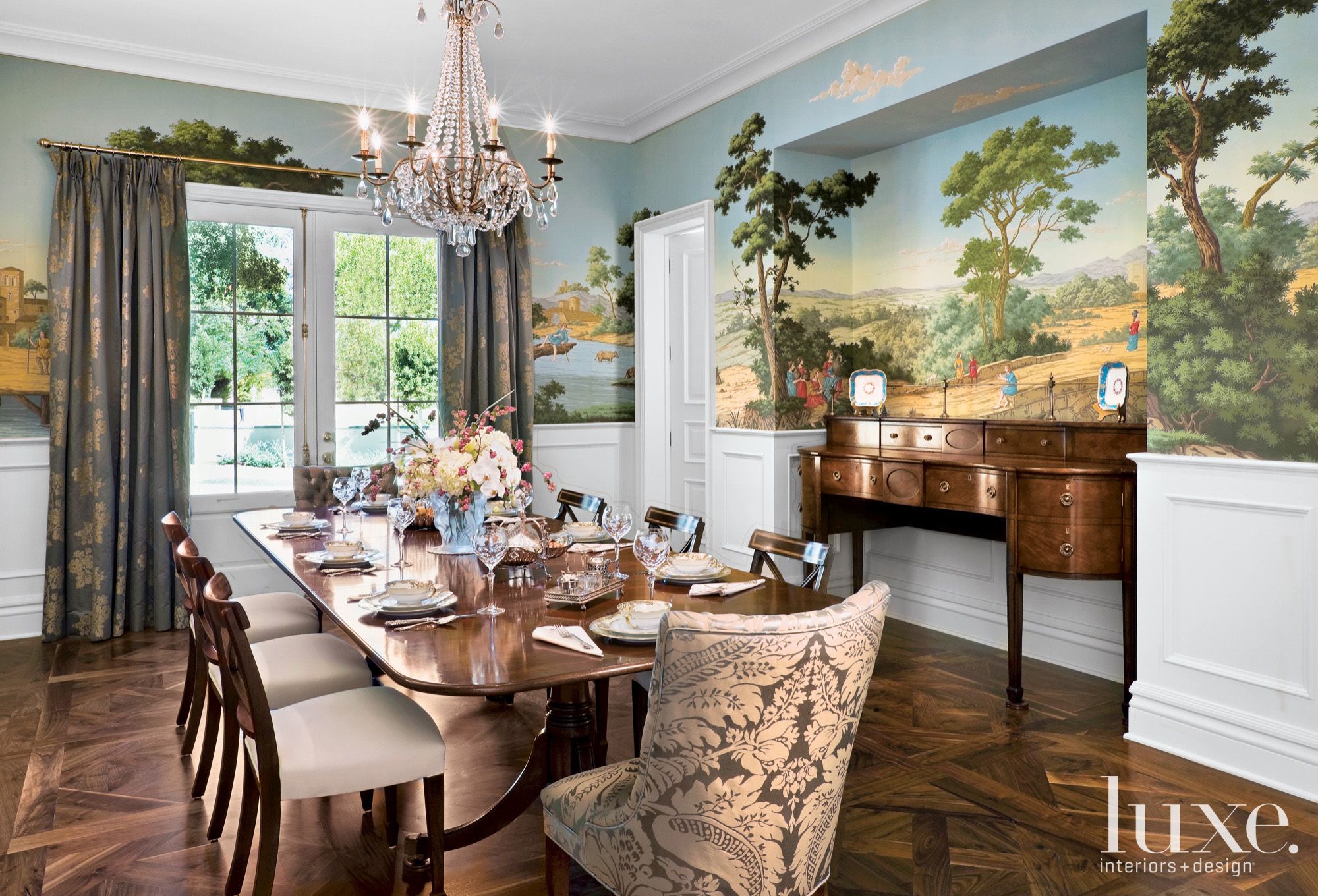
4. Chair Types
Dining chairs are where you can really add personality to your space. For a more formal space, even in a casual home, consider chairs with upholstered seats rather than all-wood options. Explore a variety of styles, including fully upholstered chairs, skirted designs, slipcovered, quilted, or tufted options. Details like nailhead trim, fabric choices, and leather finishes can add more detail to the overall look. For larger tables accommodating 8 or more chairs, you might opt for different chairs at the head of the table. While traditionally, these chairs used to be the same, just with arms, today’s design-minded rooms often feature varied styles for a less formal and more personalized look. Don’t forget to consider comfort and cleanability—after all, you want to enjoy yourself and not feel the need to run around with a bottle of club soda!
5. Essential Support Furniture
Support furniture like sideboards, buffets, or china cabinets can be both functional and stylish. These pieces offer additional storage for your fine china, serving ware, and linens, while also adding a layer of sophistication to your space. Many dining tables have complimentary pieces in the collection to choose from. If your dining area has lower ceilings or is compact, sideboards and buffets are ideal to maintain an open feel. Bar carts are also a wonderful addition to a dining room, and they can be used around the house for various entertaining events.
6. Flooring Options
Many dining rooms have a change in the flooring material, making it stand out from the rest of the home. If you currently have carpet, consider an upgrade to hardwood floors, which also allows for the addition of an area rug that can add even more to your design. When selecting a rug, prioritize size and ease of maintenance. Wool and nylon rugs are durable and easy to clean, while viscose can add shine but is prone to staining. Polyester rugs are easy to clean but don’t hold up to wear and tear. A combination of hardwood floors and a well-chosen rug adds warmth and texture. Make sure the rug is large enough to accommodate the table and chairs to avoid an awkward look.
7. Wall Treatments
Wall treatments are like the icing on the cake. Since dining rooms often serve as entertaining spaces at the forefront of your home, consider bold paint colors, classic wainscoting, or gorgeous wallpaper. By choosing a great foundation for the wall finish, you can then layer on with artwork and mirrors. Position art opposite the main entry for visual impact, and place mirrors across from windows to balance natural light. The right wall treatment and artwork will set the mood, making your dining room feel casual and inviting or adding a touch of elegance and sophistication.
8. Window Treatments
In my opinion, the window treatments in a dining room are one of the most important details. This is an area to splurge and really show off your taste. Custom treatments are essential for many dining room window styles and can be complemented with custom hardware in wood or metal. Consider pleated, lined drapes with decorative trim, or opt for stationary panels if privacy isn’t a concern. Layering drapes with blinds or roman shades provides flexibility in light control and a beautiful aesthetic. The design options are endless and should complement the style of furnishings chosen so far. This is a room where the window treatments should be a part of the decor, not based on the house’s architecture. Be creative and let loose!


9. Lighting
Lighting is crucial in setting the mood for your dining room. A statement chandelier acts as the jewelry in the room and can serve as a stunning focal point. I always recommend creating layers of lighting with sconces, table lamps, and picture lights to create the right ambiance. I only recommend using recessed lights primarily for table setting and clean-up. To choose the correct chandelier size, make sure it’s about 1/2 to 3/4 of the table’s width. For an 8-foot ceiling, install the chandelier 30-36 inches above it. For higher ceilings, add 3 inches for each additional foot.
10. Tablescape or Centerpiece
Finally, no dining room is complete without a stunning tablescape or centerpiece. This is where you can get creative and personalize your space. Seasonal flowers, candles, or a striking centerpiece can enhance the dining experience and reflect your style. Change it up for different occasions or seasons to keep things fresh and engaging. If you frequently update your decor, opt for versatile tableware that complements any style.

I hope this list provides easy-to-follow steps for designing your dining room. And remember, if all else fails, pour another glass of wine—what truly matters is the joy shared with loved ones during the holidays and special occasions.
 Only the good stuff, promise!