

Respecting Your Home’s Heritage: Thoughtful Approaches to Historical Renovation
Having lived in homes built in 1852, 1898, 1925, and 1968, I’ve experienced firsthand the joys and challenges of breathing new life into historical properties.
Each of these vintage residences taught me valuable lessons about respecting architectural integrity while adapting spaces for contemporary living.
If you’re fortunate enough to steward an architectural treasure, here’s what I’ve learned along the way.
Safety First: The Non-Negotiable Starting Point in Older Home Renovation
Let’s begin with the most important advice I can offer: do it right and test for lead and asbestos. Homes built as recently as 1978 can contain lead paint.
Partner with contractors who understand these risks and take their safety—and yours—seriously. This is absolutely not where you cut corners on a historical home project. Your family’s health and the people doing the work on your home depend on proper remediation and safety protocols.

Embrace Original Layouts When Remodeling Character Homes
Despite what renovation shows might suggest, the original layout of your historical home may be perfectly suited to your family’s needs. Our first home as a newlywed couple starting a family was a much-maligned split foyer, which has not aged well in popular opinion. For us, however, it was perfect.
The basement family room accommodated my husband’s casual furniture while the living room showcased my higher-end pieces. A small fourth bedroom in the basement provided the ideal work-from-home space for my husband, offering separation from busy toddlers. The house provided a bedroom for each of our boys and bathrooms to share.
Yes, the entryway was less than ideal, but we made it work while we lived there. Had we stayed longer, adding a proper foyer would have been our first major renovation project. The lesson? Don’t assume old layouts are inherently problematic—they might perfectly suit your unique needs.
Honoring Architectural Integrity During Home Restoration
You simply can’t fight your home’s architectural bones, nor should you want to. Any design style can be executed with thoughtful consideration for the original architecture, but it requires careful planning and some compromises.
Here’s the truth: you’ll never make an older home feel like new construction. And why would you? You bought a character home for its charm. It’s baffling to see people gutting historical homes and stripping away all interior character.
Can you open up the floorplan and expand the kitchen? Absolutely. But should you use stock trim from Home Depot and vault the ceiling just because you can? Please, no.
Choosing Period-Appropriate Materials for Historic Preservation
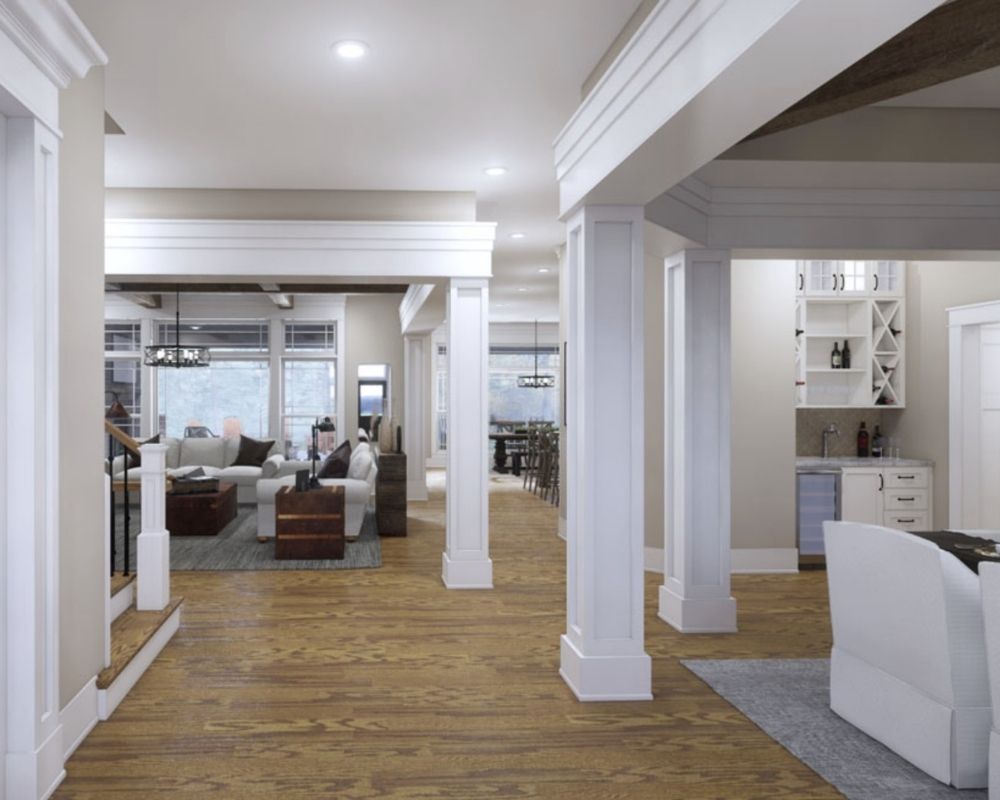
Quality and historical accuracy of materials truly matter in a period home. I know LVT flooring has its place—I use it regularly in basements and laundry rooms. But in a 100-year-old house with original crown molding and built-ins, I implore you: fix the joists, level the floors, and reinstall proper wood flooring.
The price gap between authentic materials and budget alternatives isn’t as significant as it once was, and traditional elements will maintain their value if you eventually sell. It’s worth doing it right and honoring your home’s heritage during restoration.

Balancing Modern Needs with Historic Character
This relates directly to preserving architectural details. I shouldn’t feel disoriented when stepping from your front porch into your home. If I walk onto the porch of a classic Victorian rowhouse, I shouldn’t find myself transported into a modern farmhouse with stark white walls, shiplap, shaker-style doors, and black hardware. Is your front door a portal to another dimension?
If you love your vintage house, neighborhood, and location but adore contemporary styles, I’m not saying you can’t incorporate elements you love. I’m saying you should do so thoughtfully. Consider: if you move out, will your design choices make sense with the home’s character?
Go ahead and paint walls white and update hardware, but keep the original door style. Preserve those magnificent original baseboards. Instead of adding trendy shiplap, consider period-appropriate wainscoting. Choose bronze hardware instead of black and maintain somewhat traditional elements.
Then layer in your personal décor—your giant slab of unfinished wood console table, cracked earthen pottery with an artful branch, your RH-inspired black brushstroke painting. Perhaps add a metal bowl with oversized prayer beads and truly own the look. (I tease, but with love!)
The juxtaposition between your home’s architectural integrity and your personal style creates visual tension and interest that a middle-of-the-road approach simply cannot achieve. Your space will feel more personal, more designed, and infinitely more interesting than if you stripped your home of its unique characteristics.

In Summary: Embracing the Character of Your Historic Home
Your historical home doesn’t need a facelift—it needs a spa weekend, some healthy greens, and a promise to love it where it’s at. The old adage rings true: they just don’t make ’em like they used to. And frankly, we don’t want them to.
We love these homes precisely because of their squeaking floorboards, odd angles, and timeworn finishes. These quirks are why we invest extra time, care, and sometimes expense into making them grand again.
Whether you’re renovating a Victorian, Craftsman, Colonial, or Mid-Century home, these principles of historical restoration will help you create a space that honors the past while functioning beautifully for today’s lifestyle.
Your historical home has weathered decades, perhaps centuries, of history. Treat it with the respect it deserves, and it will reward you with character and charm impossible to replicate in new construction.

Have questions about your historic home? We can help. Give us a call; we’d love to hear about your next project!
 Only the good stuff, promise!